Iftar Time Karachi Today: 2026 Ramadan Calendar & Sehri Time
If you are fasting today in Karachi, timing is everything. Whether you are navigating the rush-hour traffic on Sharea Faisal or preparing your table at home, having the exact second of sunset or dawn is a matter of religious precision. For Friday, March 20, 2026 (30 Ramadan 1447), the timings are as follows:
- Sehri Ends (Imsak): 05:19 AM
- Iftar Time (Hanafi/Sunni): 06:44 PM
- Iftar Time (Jafria/Shia): 06:54 PM
These timings are calculated using the 18-degree astronomical twilight method, specifically verified for the Karachi region. We incorporate a 1-minute preventive adjustment—subtracting one minute from Sehri and adding one minute to Iftar—to ensure your fast remains valid and secure according to local scholarly standards.
Today’s Sehri & Iftar Time in Karachi: Hanafi, Sunni & Shia (March 20, 2026)
In a city as diverse as Karachi, the “correct” time to break a fast is deeply personal and tied to one’s school of thought. For the millions observing the fast today, the difference of a few minutes isn’t just a matter of the clock—it’s about religious adherence.
Below is the precise breakdown for Friday, March 20, 2026, covering the specific needs of the Sunni (Hanafi) community, followers of Dawat-e-Islami, and the Shia (Jafria) community.
Daily Fasting Timetable: Comparison by Fiqh
| Fiqh / School of Thought | Sehri Ends (Imsak) | Iftar Time (Maghrib) |
| Fiqa-e-Hanafia (Sunni) | 05:19 AM | 06:44 PM |
| Dawat-e-Islami | 05:19 AM | 06:44 PM |
| Fiqa-e-Jafria (Shia) | 05:09 AM | 06:54 PM |
Why the 1-Minute “Safety Margin” Matters
If you look at various calendars across Karachi, you might notice a slight discrepancy of 60 seconds. This is the Preventive Adjustment—a hallmark of Karachi’s cautious religious tradition.
- For Sehri: We subtract 1 minute from the calculated astronomical dawn to ensure you finish your meal well before the actual start of Fajr.
- For Iftar: We add 1 minute to the calculated sunset to guarantee the sun has completely disappeared below the horizon before the fast is broken.
In a hyper-urban environment like Karachi, where the horizon is often obscured by high-rises or coastal haze, this 1-minute buffer acts as a “Trust Signal” for your fast. It ensures that whether you are in the heart of Saddar or the outskirts of Malir, your religious obligation is fulfilled with total certainty.
The Jafria Variance: Understanding the 10-Minute Gap
Followers of Fiqa-e-Jafria observe Iftar slightly later (approximately 10 minutes after the sunset time used by Hanafis). This is because the Jafria school requires the “redness” of the eastern sky to disappear after sunset before Maghrib is officially recognized. For Karachiites, this often means waiting for the sky to transition into a deeper twilight, a practice followed strictly at local Imambargahs and Jafria centers.
Ramadan Calendar 2026 Karachi: Complete 30-Day Roza Timetable
Planning your month in advance is essential for a productive and peaceful Ramadan. Whether you are organizing office hours, scheduling family Iftars at Boat Basin, or setting your alarm for Tahajjud, having a reliable 30-day view is the first step.
Below is the anticipated Karachi Ramadan 2026 Schedule. Please note that these dates are based on astronomical calculations; the actual start of the holy month depends on the official moon sighting.
30-Day Ramadan Timetable 2026
| Roza | Date (2026) | Day | Sehri Ends | Iftar Time |
|---|
When is Ramadan 2026 in Karachi expected to start?
The Pakistan Meteorological Department (PMD) has forecasted that the Ramadan crescent is likely to be born on the evening of February 17, 2026. Because the moon will be approximately 26 hours old by the evening of February 18, visibility in Karachi’s clear coastal skies is expected to be very high.
If the moon is sighted on the 18th, the first Roza in Karachi will be on Thursday, February 19, 2026. However, the final decision rests solely with the Central Ruet-e-Hilal Committee. We recommend keeping your radio or TV tuned in on the 29th of Shaban for the official announcement by the Chairman.
Karachi Ramadan Sehri & Iftar Calendar Download
To make your life easier during the holy month, we have prepared high-resolution versions of this calendar that you can keep on your phone or print for your kitchen. Having an offline copy ensures you aren’t scrambling for a data connection when the clock is ticking down to the final minute of Sehri.
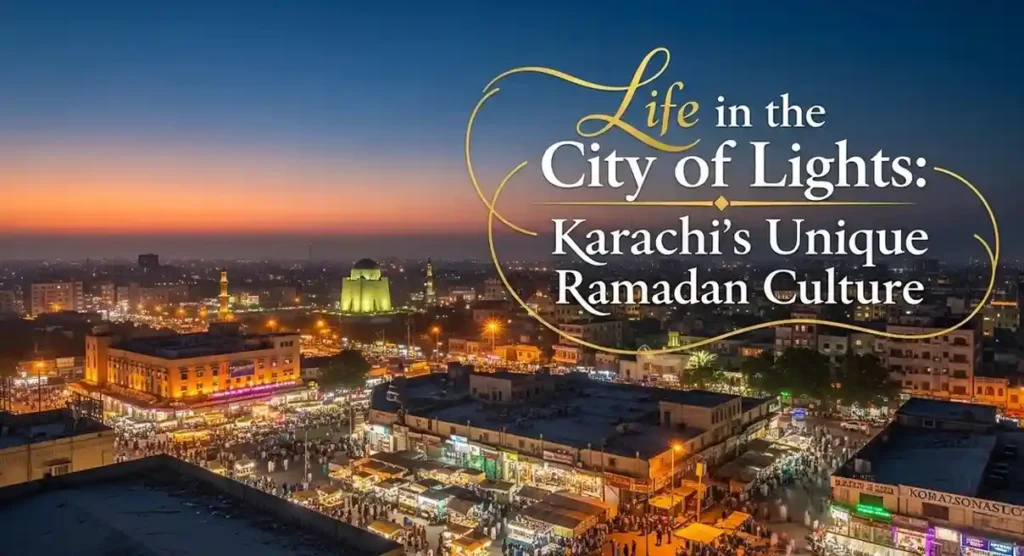
Life in the City of Lights: Karachi’s Unique Ramadan Culture
Ramadan in Karachi is not just a change in schedule; it is a complete transformation of the city’s soul. Known as the “City of Lights,” Karachi truly earns this title between Maghrib and Fajr. While the rest of the country slows down, Karachiites embrace the night, turning the hours of darkness into a vibrant display of devotion, community, and culinary heritage.
Historic Mosques and Taraweeh Arrangements Across Karachi
The spiritual heart of the city beats loudest in its iconic masjids. For those seeking a profound experience during the night prayers, these landmarks offer more than just space—they offer history.
- Masjid-e-Tooba (Gol Masjid), DHA: Famous for being the largest single-dome mosque in the world without a central pillar, this architectural marvel in Phase 2 DHA becomes a serene sanctuary for thousands during Taraweeh. The acoustics under the massive white marble dome create a unique, echoing atmosphere for the Quranic recitation.
- Memon Masjid, Saddar: Located in the bustling old city area, this mosque is the focal point for the merchant community. The energy here is unmatched, with soulful Taraweeh led by renowned Qaris and extensive public Iftar arrangements that spill out into the historic streets of Saddar.
- Jamia Masjid Baitul Mukarram, Gulshan-e-Iqbal: A central hub for residents of East Karachi, this mosque is known for its discipline and massive gatherings. Associated with esteemed scholars, it remains a premier location for both Taraweeh and the final ten days of Itikaf.
From Burns Road to Boat Basin: The Karachi Food Scene
In Karachi, the “Sehri Party” is a cultural staple. The city doesn’t sleep, and neither do its kitchens.
- Burns Road (Saddar): No Ramadan is complete without visiting the historic food street. From the slow-cooked Nihari at Waheed to the crispy Samosas at Fresco, the air here is thick with the scent of tradition.
- Boat Basin (Clifton): The ultimate destination for a late-night Sehri. Families gather here for freshly made Khagina (scrambled eggs), flaky Parathas, and steaming cups of tea.
- Liaquatabad’s Pera Lassi: To combat the upcoming warmth of March, the thick, creamy Pera Lassi of Liaquatabad is a local secret for staying hydrated. Similarly, no Iftar table in Karachi is complete without a chilled jug of Rooh Afza or Pakola to break the day’s thirst.
Community Dastarkhwans: Edhi, Saylani, and JDC Charity Drives
Karachi is often called the most charitable city in the world, and Ramadan is when this spirit shines brightest. On every major artery—from Sharea Faisal to University Road—you will see Roadside Dastarkhwans where thousands of strangers sit together to break their fast.
Organizations like the Edhi Foundation, Saylani Welfare, and JDC (led by Syed Zafar Abbas) set up massive, organized food distribution centers. JDC’s free gourmet Sehri at Numaish Chorangi has become a modern symbol of Karachi’s inclusivity, serving high-quality meals to everyone regardless of their social standing. Supporting these local heroes is a core part of the “Karachi Experience,” ensuring that in this city of millions, no one goes hungry at Iftar.
Why Accuracy Matters: Understanding Karachi’s Sunset Variance
Karachi is not just a city; it is a sprawling metropolitan region covering over 3,500 square kilometers. For a fasting person, this geography matters. Because the sun travels from East to West, a few kilometers of distance can translate into seconds or even minutes of difference in when the sun actually crosses the horizon.
The Malir vs. Kemari Time Gap
If you are breaking your fast in Malir or Jinnah Avenue, the sun sets approximately 1 to 2 minutes earlier than it does for someone standing at the Karachi Port (Kemari) or Clifton Beach. While a central siren is used to maintain city-wide harmony, those relying on high-precision apps or personal visual sightings must account for this coastal variance. In 2026, where digital accuracy is paramount, we ensure our timings are calibrated to a central city coordinate that balances these micro-variances, keeping the entire “City of Lights” synchronized.
Verified Calculation Methods (UISK & 18-Degree Rule)
Trust in a prayer timetable comes from its source. Our data is meticulously aligned with the standards set by the University of Islamic Sciences, Karachi (UISK).
- The 18-Degree Rule: We utilize the globally recognized astronomical standard where Subh-e-Sadiq (true dawn) is calculated when the sun is 18 degrees below the horizon.
- Reliability: This method is the “Gold Standard” for Karachi’s atmospheric conditions, preventing the risk of eating during Suhoor when the fast has technically begun.
Essential Ramadan Duas and Daily Practices for Karachiites
Fasting is as much about the intention (Niyyat) and supplication (Dua) as it is about abstaining from food. To help you maintain the spiritual focus required for a valid fast, here are the essential prayers used by generations of Karachiites.
Sehri ki Dua (Intention for Fasting)
Recite this before the first light of dawn (Fajr) to officially begin your fast.
- Arabic: وَبِصَوْمِ غَدٍ نَّوَيْتُ مِنْ شَهْرِ رَمَضَانَ
- Roman Urdu: Wa bisawmi ghadin nawaiytu min shahri Ramadan.
- English: “I intend to keep the fast tomorrow for the month of Ramadan.”
Iftar ki Dua (Breaking the Fast)
Recite this at sunset before taking your first sip of water or date.
- Arabic: اَللّٰهُمَّ اِنِّی لَکَ صُمْتُ وَبِکَ اٰمَنْتُ وَعَلَیْکَ تَوَکَّلْتُ وَعَلٰی رِزْقِکَ اَفْطَرْتُ
- Roman Urdu: Allahumma inni laka sumtu wa bika aamantu wa ‘alayka tawakkaltu wa ‘ala rizqika aftartu.
- English: “O Allah! I fasted for You, and I believe in You, and I put my trust in You, and I break my fast with Your sustenance.”
How to Stay Hydrated in Karachi’s Late-Winter Humidity
Ramadan 2026 falls in late February, a period when Karachi transitions from a cool breeze to a more humid, coastal heat. While the daytime maximum is a manageable 27°C, the 40-50% humidity can cause rapid fluid loss.
- The “Slow Hydration” Window: Instead of drinking two liters of water at Iftar (which causes bloating), sip 250ml every hour between Iftar and Sleep.
- Liaquatabad Strategy: Opt for Lassi or Yogurt during Sehri. The probiotics and slow-digesting proteins help your body retain moisture longer than plain water or caffeinated tea.
- Avoid “Salt Spikes”: While Karachi’s Pakoras are legendary, excessive salt at Iftar will make you incredibly thirsty by the time the sun rises the next morning. Balance your plate with potassium-rich dates and bananas.
Frequently Asked Questions about Iftar Time Karachi
What is the Iftar time in Karachi today for Dawat-e-Islami?
For today, March 20, 2026, the Iftar time in Karachi according to the Dawat-e-Islami (Hanafi) calendar is 06:44
PM.
Is there a difference between 2025 and 2026 Ramadan dates in Pakistan?
Yes. Because the Islamic Hijri calendar is roughly 10–11 days shorter than the Gregorian year, Ramadan 2026 moves earlier into the winter season. While Ramadan 2025 began on March 2nd, Ramadan 2026 is expected to begin on the evening of February 18, 2026, with the first fast on February 19th.
What time does the Karachi Ramadan siren go off?
In Karachi, the central sirens—managed by major Mosques and City Administration—sound exactly at 05:19 AM to signal the end of Sehri and at 06:44 PM (for today’s coordinates) to mark the start of Iftar. It is a local tradition to rely on these sirens, though it is always recommended to keep a 1-minute safety buffer as discussed in our Technical Mastery section.
Summary Checklist for Your Daily Fast
- Verify your Fiqh: Remember the 10-minute gap for Fiqh-e-Jafria.
- Stay Hydrated: Sip water between Iftar and Taraweeh to avoid coastal dehydration.